
The Problem with Psychedelic Medicine
Weed's Cautionary Tale for LSD and Psilocybin

Microdosing psilocybin for productivity. Veterans with PTSD traveling abroad for ibogaine. Ayahuasca tourism in South America. Worse yet, Michael Pollan’s “How to Change Your Mind.”
Much has been made of the potential medicinal and/or psychological benefits of taking a number of psychedelic drugs, including, but not limited to, LSD, ibogaine, psilocybin, MDMA, and ayahuasca. There are good reasons to be wary of the press these drugs have gotten over the past five or ten years, not the least of which is the general tendency to taxonomize them in a way that suggests they share a similar chemistry — this is not the case.1 Some of these drugs are synthetic, some are plant-based (and native to different continents), and they all have wildly different pharmacology and thus different effects on the bodies and brains of those who take them.
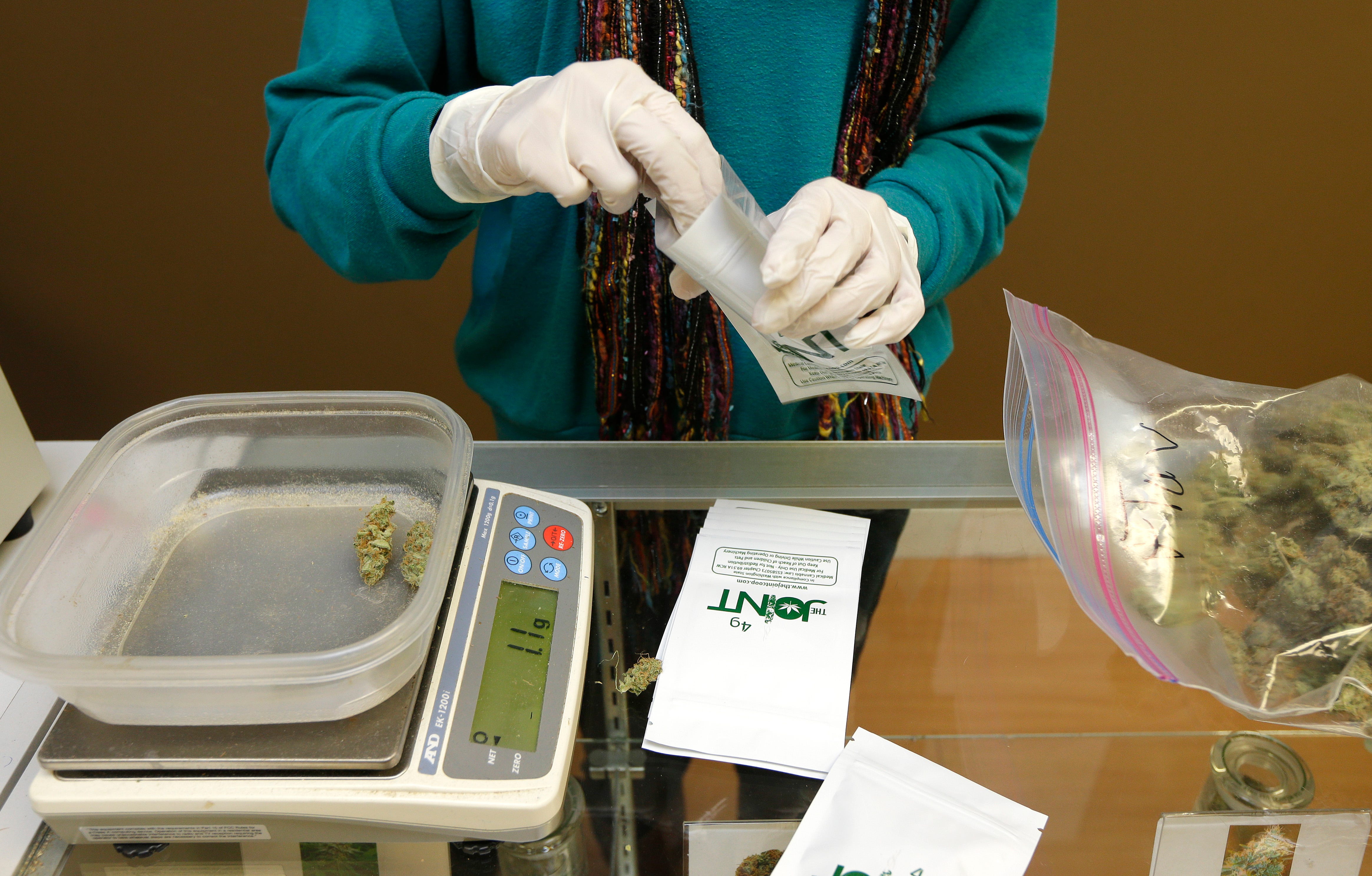
The general interest in psychedelics and the renewed calls to legalize some of them, at least for medical purposes, is well-meaning, especially considering the ineffective and inhumane ways the US government has demonized drug users since at least the 1960s. But overstating the medicinal potential of illegal drugs is misleading and ultimately fails to challenge the status quo, established many decades ago, that tolerates a drug’s use only in proportion to its purported medical benefits. We’ve already seen the exact same process play out already with cannabis, which new research suggests is worse for users’ health than previously thought, and has spawned a regulatory nightmare in states where it is legal.2 For instance, six companies in the cannabis and CBD industry were busted by the Federal Trade Commission in 2020 for deceptive claims about their effectiveness in treating health conditions including cancer, heart disease, and Alzheimer’s. Meanwhile, research steadily shows that medical marijuana doesn’t have much of an effect for most indications that it’s prescribed for.
This isn’t to say that cannabis should be illegal, but something has clearly gone wrong along the way. With psychedelics coming down the regulatory pipeline next, we have to try to untangle the fraught relationship we (as Americans) have always had with drugs and try to think clearly about the ultimate goals of legalization.
The History of Criminalization
Neither psychedelics nor cannabis were made illegal because of their health risks, but for political reasons that reflected growing cultural divisions in the US at the time.
Recreational cannabis use in the US goes back to at least the mid-1800s, and hemp has been cultivated as a cash crop for as long as the country has existed. Calls to regulate cannabis usage gained traction in the first half of the 1900s, fueled then (as now) by racism and xenophobia directed at Mexicans that were entering the country for work. The use of the word “marijuana” became popular with the anti-cannabis establishment, naturally evoking an association with Spanish-speaking Mexico. In 1930, noted racist Harry J. Anslinger took the helm at the Federal Bureau of Narcotics (FBN), where he spent 32 years advocating for harsher drug penalties and promoting the stereotype of the cannabis user as a hardened criminal and/or a member of the “degenerate races,” i.e. Black people (particularly jazz musicians) and Hispanics.3 Anslinger also drafted the 1937 Marihuana Tax Act, which effectively made the drug illegal. Since then, the US has struggled tremendously with cannabis use and racial justice. The 1986 Anti-Drug Abuse Act, signed into law under Reagan, established mandatory sentencing for all drugs and provided a pretext for the overt racism that flooded federal prisons with Black convicts.4 As recently as 2010, Black people were almost four times as likely to be arrested by police for possession of cannabis, despite using at a similar rate as their white counterparts, and receive, on average, harsher penalties and sentences for the same drug-related crimes. In all, racist cannabis-related sentencing practices have imprisoned and disenfranchised millions of Black Americans (and this is to say nothing of the hysteria surrounding crack in the 1980s).
Psychedelics (LSD and psilocybin, for the purposes of this essay) have a much shorter history. LSD was made illegal in the US under the Staggers-Dodd Bill, which prohibited possession about 35 years after its discovery by Swiss chemist Albert Hoffman. Two years later, both drugs were classified as Schedule I drugs alongside cannabis by the 1970 Controlled Substances Act (CSA) under the banner of Nixon’s war on drugs. The inclusion of LSD and other psychedelics in the CSA is the indisputable result of the moral panic surrounding anti-establishment counterculture in the US, which defined itself in opposition to Nixon’s “silent majority” of white, middle-class Americans who supported the war in Vietnam. Nixon passed the baton to Reagan, then Bush, both of whom gleefully ramped up punitive measures against drug users and openly expressed contempt for anti-war, anti-establishment hippie counterculture, viewing it as a threat to American values (as well as aesthetically distasteful).5
The CSA became the foundation for the following 50 years of drug legislation. The act created five schedules (or classifications) for drugs, with I being the most regulated and V the least, and with each drug scheduled based on two criteria: (1) its accepted medical use; and (2) its potential for abuse.6 All psychedelics and cannabis are Schedule I drugs.7 Worthy of note is the use of the word “abuse.” What does it mean to abuse a drug, and how does it differ from merely “using” a drug? The reasoning is circular – the law that defines drug legality characterizes “abuse” as “use of an illegal drug.” That fentanyl, the infamously addictive synthetic opioid that kills over 10,000 people in the US per year, is Schedule II – owing to its use as a prescription painkiller – should also raise an eyebrow. In comparison, cannabis and LSD combined took the lives of zero Americans in 2025.
Framing drug use in medical terms has condemned all scheduled drugs to the same fate: advocacy for the decriminalization or legalization cause has to challenge the basis of a drug’s inclusion on the Drug Enforcement Administration (DEA)’s schedules. In other words, there has to be widely available and reputable evidence (including well-controlled studies) that a drug has a medical use before there’s any hope of its graduation from Schedule I.
(More) Scare Tactics and Propaganda
Federal attention to illicit drug use increased considerably under Reagan, who vowed progress in the “war on drugs.” In 1983, LAPD chief Daryl Gates founded the federally-funded Drug Abuse Resistance Education program (D.A.R.E.), in which police officers made visits to public schools and warned students as young as ten about the dangers of drug use. Around the same time, Nancy Reagan launched the “Just Say No” campaign to discourage children and adolescents from caving to alleged peer pressure to use illegal drugs. These (and other) campaigns shared a common ideology that promoted abstinence from all illegal drug use at the expense of harm reduction education, and erroneously identified peer pressure as the primary reason for minor drug use.8
These campaigns, while empirically ineffective in preventing drug use, succeeded in inculcating in the average American mind (or ultimately a third of the US population) the idea that drugs were illegal for purely safety and public health-related reasons.9 They also tacitly repudiated the reason scheduled drugs were made illegal in the first place; i.e. because they were used by certain groups of people. Despite its name, you need only look at D.A.R.E.’s curriculum, which condemned graffiti and tattoos, as proof that it was part of a greater culture war. Under D.A.R.E., anyone was liable to become a victim of peer pressure, a hazard that required hyper-vigilance from a student, her parents, and the community, and thus all risky behavior was framed exclusively in terms of addiction, crime, and health.
The Decriminalization of Cannabis
Cannabis managed to win the war on drugs despite the federal government’s best efforts to criminalize and stigmatize its use. In 1996, California became the first state to legalize medical cannabis under Proposition 215 following years of advocacy and growing awareness of its medical potential as a means of pain management and appetite stimulation, particularly for those undergoing chemotherapy. It’s a miracle it was ever legalized given the Food and Drug Administration requirement that mandates prior approval for any clinical research on Schedule I drugs. Until 2016, the National Institute on Drug Abuse (NIDA) was the sole entity licensed by the DEA to conduct research on cannabis. Consequently, there are very few longitudinal studies on its effects.
Cannabis has enjoyed popularity as both medicine and a safer alternative to alcohol, and now stands on the cusp of federal rescheduling and further decriminalization. However, recent research has emerged that indicates health risks, including the poorly-understood correlation between cannabis use and psychosis, bipolar disorder, depression, and anxiety; poor heart health; cognitive impairment (including decreased IQ); and addiction, both physical and psychological. There are also a number other public health headaches associated with cannabis; for instance, a warrant is required to measure the blood THC level of a person suspected of driving stoned.10 Cannabis’s medical potential has its limitations, too – it has use for the management of the symptoms of certain diseases, but is not known to directly treat any medical disorder.
On the whole, we were oversold on cannabis’s relative safety and therapeutic potential, a consequence of a system with only one exit ramp: clinical research with the goal of eventual recognition in the medical field. But to determine that a drug has medicinal uses is to effectively legalize it, and to legalize it subjects it to a complex economy and to interest groups that will reliably fail to act in the best interests of the public.11 Some nuance is needed: legalizing any kind of psychoactive drug requires caution, but the possession of all drugs should be decriminalized.
The Road Ahead
Cannabis’s long journey to decriminalization and entrance into the mainstream, both as a recreational drug and medicine, cannot become the blueprint for psychedelics. The notion that a drug should have demonstrated medical benefits to warrant decriminalization is idiotic at a minimum, particularly in a country where alcohol and tobacco are legal and available on every street corner. Framing drug use this way also doesn’t save it from being overly moralized – if drug use is only okay if it’s healthful, then we close the door on every other drug that either comes with risks (even manageable ones) or that is ill-suited for investment by big pharma.
The drug scheduling system was established in bad faith and was rotten from the outset. This is why we need to go back to the very beginning, take a look at decriminalization with eyes unclouded by moral panic, and initiate an uncomfortable conversation about the limits of personal freedom in our country.
In short, this means that the repeal of the CSA should be the number one priority in drug legislation advocacy, after which drug legislation can be drafted on a case-by-case basis. Drugs that are vastly different from one another both chemically and culturally will require different approaches. For example, fentanyl use needs to be stymied with a two-pronged approach that (1) encourages harm reduction practices on the local level; and (2) foreign policy that curbs the flow of the drug and its precursors from China and Mexico.
A drug like LSD is a different story. Once the drug of choice for hippies, it has re-entered the mainstream in recent years as a means of increasing energy levels, creativity, and productivity via microdosing. LSD is a good candidate for legislation, as it carries few health risks and is cheap to produce.12 But these reasons are exactly why legalizing it would be painful – the only way to turn a profit on micrograms per tab of LSD would be upcharges that violate the spirit of the anti-establishment, anti-commercial philosophy embraced by its original producers (of which there were only ever a handful in the whole world, even at the peak of its popularity).
It’s stomach-turning to think that we can only accept drugs that claim to be performance-enhancing and/or healthful. Even without the DEA to ruin the fun, we’ve painted ourselves into a corner culturally in which “wellness” and productivity are no longer a means to an end, but the end itself.
1 “Psychedelics” is a category like “vegetables.” Both sets are based on our subjective experience of their elements, not their scientific classifications. (“Vegetable” is a purely culinary term – in terms of scientific taxonomy, there are no vegetables, just legumes (peas, lentils, beans), roots (carrots, beets), tubers (potatoes), bulbs (onion, garlic), leaves (lettuce), and fruits (cucumbers, tomatoes, pumpkin).)
2 There are 595 legal cannabis dispensaries in New York City, and thousands more illegal ones.
3 Anslinger once said, “There are 100,000 total marijuana smokers in the U.S., and most are Negroes, Hispanics, Filipinos and entertainers. Their Satanic music, jazz and swing, result from marijuana usage. This marijuana causes white women to seek sexual relations with Negroes, entertainers and any others.”
4 This law also famously established a 100:1 sentencing ratio between powdered cocaine and crack. Note that they are the same drug.
5 Reagan famously said, “for those of you who don’t know what a hippie is, he’s a fellow who dresses like Tarzan, has hair like Jane, and smells like Cheetah.”
6 Notably absent: toxicity.
7 Marijuana will be rescheduled to Schedule III this year. Thanks Trump!
8 Another organization, Partnership for a Drug Free America, responsible for the 1987 “This Is Your Brain on Drugs” PSA, was embroiled in controversy when it was revealed that it had received millions of dollars in funding from tobacco, alcohol, and pharmaceutical companies. Oops!
9 There is a plethora of research that indicates that D.A.R.E. failed to stymie drug use. One oft-cited study even found students who had completed the program were more likely to use drugs. Perhaps “raising awareness” isn’t the best way to encourage people to resist temptation. More likely, once graduates of the program realized that smoking pot doesn’t kill you, it invalidated the entire curriculum and placed them back at square one with no drug savvy.
10 Depending on the source, between 20-30% of cannabis-using Americans have admitted to driving under the influence.
11 This is true for virtually everything, and doubly true for anything with addictive properties.
12 Tolerance to LSD also develops along a steep curve, making it difficult for a user to continually experience its effects over consecutive days.