
The Drugstore Cowboys of Seoul
Obesity, Drug Use, and the World of Stimulant Appetite Suppressants in South Korea

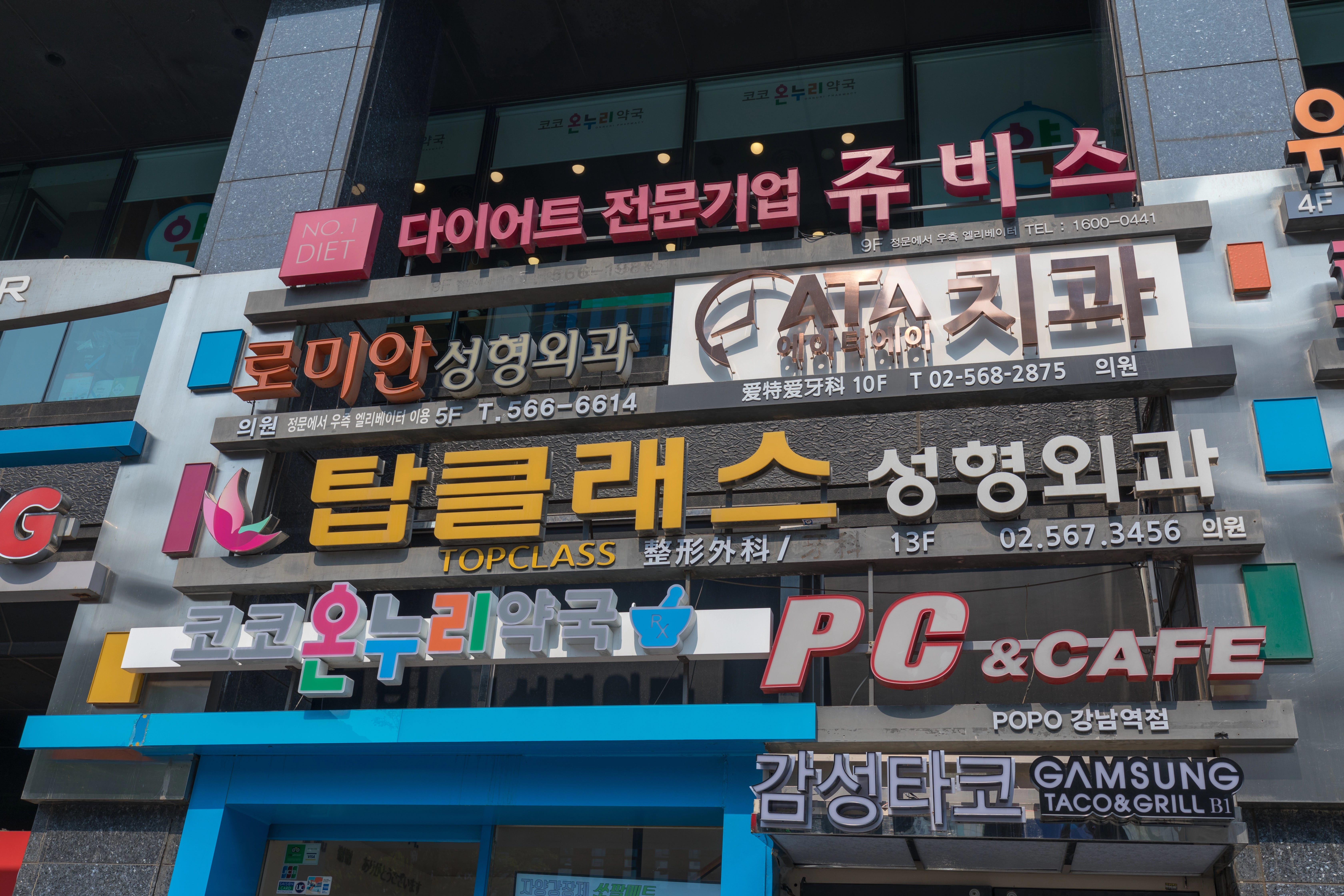
You have probably heard that South Korean standards of beauty are stringent and suffocating; that friends and family members grill each other about their bodies and weight; that Apgujeong is the plastic surgery epicenter of the universe. These preconceptions are largely true, and often paired with the observation that East Asians, including South Koreans, are much slimmer than their Western counterparts.
Against this backdrop, it probably shouldn’t come as a surprise that weight-loss supplements, medications, and more dubious treatments have been wildly popular in Korea since long before GLP-1s were launched domestically in late 2024. While obesity clinics themselves are ubiquitous, many respectable gynecologists, dermatologists, and practitioners of Eastern medicine also prescribe Ministry of Food and Drug Safety-approved stimulant appetite suppressants.
Now, understanding clinical obesity and BMI is critical to interpreting this unsettling aspect of Korean society. Western media often states that the obesity rate in the United States is 42%, compared to 5% in South Korea, a statistic which is only true if you disregard the difference in the thresholds for obesity between people of different races.1 In the US, a person is classified as obese if they exceed a BMI of 30 kg/m2; in accordance with the World Health Organization’s guidelines, a South Korea is obese at a BMI of 25. This is because obesity is not a measure of how fat a person is, but how likely she is to suffer weight-related health consequences like cardiovascular disease and diabetes. As it happens, East Asians are at a higher risk for these kinds of diseases at lower BMI thresholds, which is why 37.9% of all South Koreans are clinically obese despite the fact that the populace appears much healthier on the whole than white Americans do. This also has a considerable role to play in the fixation on weight – many South Koreans are not only told that they are fat by their mothers-in-law, they are also being told that they are obese at the doctor’s office. And they are. (Clinically!)
In December, comedian Park Na-rae made headlines when it was reported that she had been receiving prescription narcotics for weight loss from a quack doctor known as the “injection aunt.” The drug was revealed to be phentermine, a substituted amphetamine (like Adderall and other drugs banned in South Korea under its Narcotics Control Act) commonly referred to as the “butterfly drug” (나비약) for its unique shape. Phentermine is currently sold under 42 different names in South Korea, including Dietamin, Lofat, and Metamax. Its sister, phendimetrazine, is sold under another 33.
That this would constitute a scandal is ironic considering the appetite for phentermine in Korea. Of the 1.2 million people that were prescribed stimulant appetite suppressants in 2024, approximately 90% were women, suggesting that roughly 5% of South Korean women were on either drug (under the assumption that there were no duplicate prescriptions, which we’ll come to later). While their prevalence isn’t a jaw-dropping “one in every three people,” appetite suppressants still fly under the radar more than you would expect for drugs prescribed at a higher rate than Adderall is in the US.
Wegovy, Mounjaro, and similar medications are also highly sought-after – there were over a million prescriptions for obesity drugs in the first half of 2025, of which at least 340,000 were for Wegovy, which was launched earlier that year. (Worthy of note is that South Korean women comprise over 70% of patients receiving these prescriptions, despite higher rates of obesity among their male counterparts. But what else is new?) What’s odd about appetite suppressants is that the influx of GLP-1 competitors hasn’t seemed to put a dent in the demand for new prescriptions, suggesting an inelastic quality to their popularity.
Phentermine and phendimetrazine are banned in the EU and Japan, and are schedule IV and III controlled substances in the US, respectively. Their psychoactive properties and potential for abuse are increasingly recognized in South Korea as well – in December 2025, South Korea’s Ministry of Food and Drug Safety began requiring doctors to record prescriptions of appetite suppressants into its Narcotics Information Management System (NIMS) to prevent “doctor shopping” in which one patient (consumer?) visits multiple clinics to collect excess prescriptions of a drug.
With zero trade between North and South Korea, the latter is effectively an island nation, and one with strict border controls and an army of drug-sniffing dogs at Incheon Airport, rendering the sale of plant-based drugs (marijuana, cocaine, etc.) nearly non-existent. Citizens of South Korea are also subject to a kind of global jurisdiction such that they can be charged for consuming illegal drugs while abroad and in countries where they are legal, so few risk, say, smoking pot on a vacation to Thailand.
Insofar as Koreans (including those north of the 38th parallel) enjoy drugs, the poison of choice is unequivocally psychotropic drugs, like methamphetamine, over narcotics (like opioids) or marijuana. This probably has as much to do with the fact that the precursors for synthetics drugs are more easily sourced domestically as it does the general cultural preference for anything that can be considered “performance enhancing.” In 2025, the United Nations Office on Drugs and Crime reported that, “methamphetamine continues to dominate Korea’s drug landscape,” noting that crystal meth seized by the authorities averaged 95% purity, not too far a cry from Walter White’s 99.1%.
With Amphetamine-based drugs like Vyvanse and Adderall banned in South Korea, there is good reason to suspect that there is a solid contingent of people who seek psychotropic drugs, both illegal and prescription, to self-medicate. (This is to say nothing of the broader cultural stigma surrounding mental health and psychological disorders.)
It is worth remembering that a drug’s unintended side effect is as much a consequence of its pharmacology as its intended one. A 2015 paper on the potential use of stimulant appetite suppressants in patients with ADHD concluded:
The psychiatric side effects that have plagued many efficacy studies [on appetite suppressants] might actually be evidence of their mode of action and therefore their efficacy. … Indeed there is no clearly apparent logical reason why dexamphetamine is used for treating ADHD while phentermine has been retained for obesity, which raises the question of whether this was simply an accident of history.
While it would be difficult to corroborate this particular claim (and there is a dearth of studies on phentermine over the past fifty years anyhow), searching “phentermine side effects” on Naver or DCinside returns pages of anecdotes from netizens who have discovered its therapeutic potential and are using it to study law, self-medicate for depression, and boost their energy levels, among other posts describing intense withdrawals and other frightening psychological effects, like memory problems.
So, what is the significance of phentermine and phendimetrazine’s enduring popularity in Korea? Well, there is a buffet of factors in play, but there is one main point that the reader should keep in mind: it would be a mistake to interpret the hold that stimulant appetite suppressants have on the Korean market solely through the lens of rising obesity rates and rigid beauty standards. The psychoactive component of any drug is inalienable from its chemistry, so even if most people don’t start on the drug to self-medicate or for energy (or whatever other reason someone might take a stimulant), it seems inevitable that it becomes a reason they wind up staying on it.
Moreover, any use of a psychoactive drug for an unindicated purpose or in illegal quantities constitutes plain old drug use, whether or not it’s available by prescription.2 The fact that stimulant appetite suppressants have a well-documented potential for abuse yet maintain unfaltering demand in a market saturated with more effective substitutes is worthy of recognition for what it is — a public health headache that sits at the intersection of lookism and drug dependency.
1 Even the OECD factsheet on obesity cites that the obesity rate in South Korea is 4%.
2 Even methamphetamine is FDA-approved for the treatment of ADHD and obesity in the US under the brand name Desoxyn.